



SDLA Compliance Resource
Give Students Age-Appropriate Nondiscrimination and Complaint Information
A handbook control for explaining protected-class discrimination, discriminatory harassment, intimidation, and bullying in words students can recognize and use.
In Plain Language: Students should not need legal training to recognize discrimination or ask for help. The handbook must explain, at an age-appropriate level, the nondiscrimination policy, how to report or file a complaint, and what resources are available. Elementary, middle, and high school versions may need different examples and reading levels.
Why this matters
A policy written only for adults can be technically present but practically unusable. Clear examples help students distinguish ordinary conflict or general bullying from conduct tied to an actual or perceived protected characteristic—and make clear that both still deserve an appropriate school response.
Joint ownership
Owner: equity/UCP coordinator. Partners: student services, Title IX and Section 504 coordinators, school leaders, counselors, students, communications, accessibility, translation, and legal/policy staff.
From the policy to an age-appropriate student handbook section: the SDLA ITO workflow
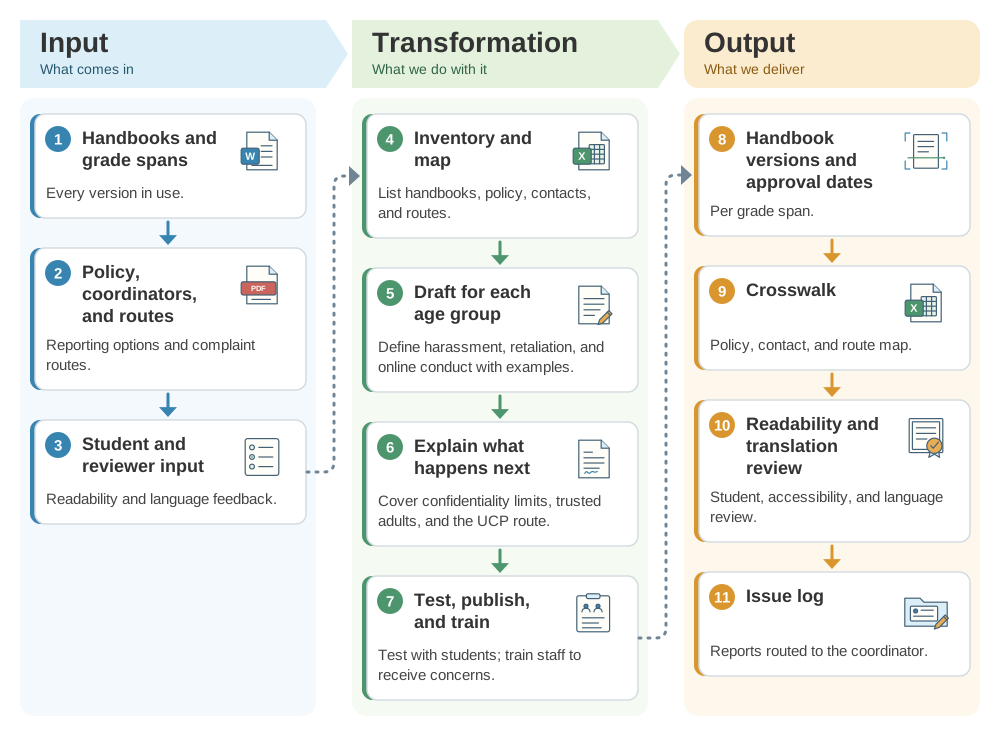
Students should be able to recognize discrimination and ask for help without legal training. This SDLA ITO (Input, Transformation, Output) graphic shows how every handbook and grade span, the governing policy, and complaint routes become the grade-span handbook versions, the readability and accessibility review, and the issue log.
Operational workflow
- Inventory every handbook and grade span; identify the governing policy, coordinators, reporting options, emergency contacts, and complaint routes.
- Write developmentally appropriate definitions and examples, including protected-class harassment, retaliation, online conduct, and association with a protected person or group.
- Explain confidential support limits, what happens after a report, how to contact a trusted adult, and how to use the UCP or applicable federal route.
- Test the text with students and accessibility/language reviewers; reconcile it with the website, posters, forms, and staff scripts.
- Publish, distribute, and train staff to receive concerns without demanding legal vocabulary.
If the requirement is missed
A missing or unusable handbook explanation can be corrected through policy revision, republication, training, and individual remedies. A family may use the local process, California UCP where applicable, or a federal civil-rights complaint route; the proper response is prompt review and correction, not defensiveness.
Evidence to retain
- Grade-span handbook versions and approval dates
- Policy/contact/complaint-route crosswalk
- Student readability, accessibility, and translation review
- Distribution and staff-training evidence
- Issue log showing reports were routed to the correct coordinator
Official guidance and help
- Education Code section 234.1Age-appropriate handbook, policy, complaint, translation, and training duties
- CDE Equal Opportunity and AccessCalifornia education-equity resources
- CDE UCP ScopeCovered discrimination, harassment, intimidation, and bullying complaints
Source review completed August 30, 2026. Verify current federal and California law, official guidance, local policy, named contacts, language and disability access, and the facts of the individual matter before acting.