



SDLA Compliance Resource
Review Certification of the First Principal Apportionment
A CDE funding milestone that converts P‑1 attendance, taxes, CALPADS, and other certified data into updated state-aid calculations and local cash-flow expectations.
In Plain Language: When CDE certifies P‑1, retrieve the applicable exhibits and funding details, reconcile them to the data your entity and partners submitted, quantify differences from budget and Advance Apportionment assumptions, and route corrections through an authorized future process.
Why this matters
P‑1 affects February–May state-aid payments and fiscal projections. A certification date is not another local PADC submission deadline, but it is a crucial control point for finding incorrect inputs, unexpected offsets, or cash-flow changes.
Primary ownership
Primary owner: chief business official/principal-apportionment fiscal lead. Partners: PADC, attendance, CALPADS, charter/COE oversight, SELPA, local-revenue, budget, cash management, and superintendent/designee.
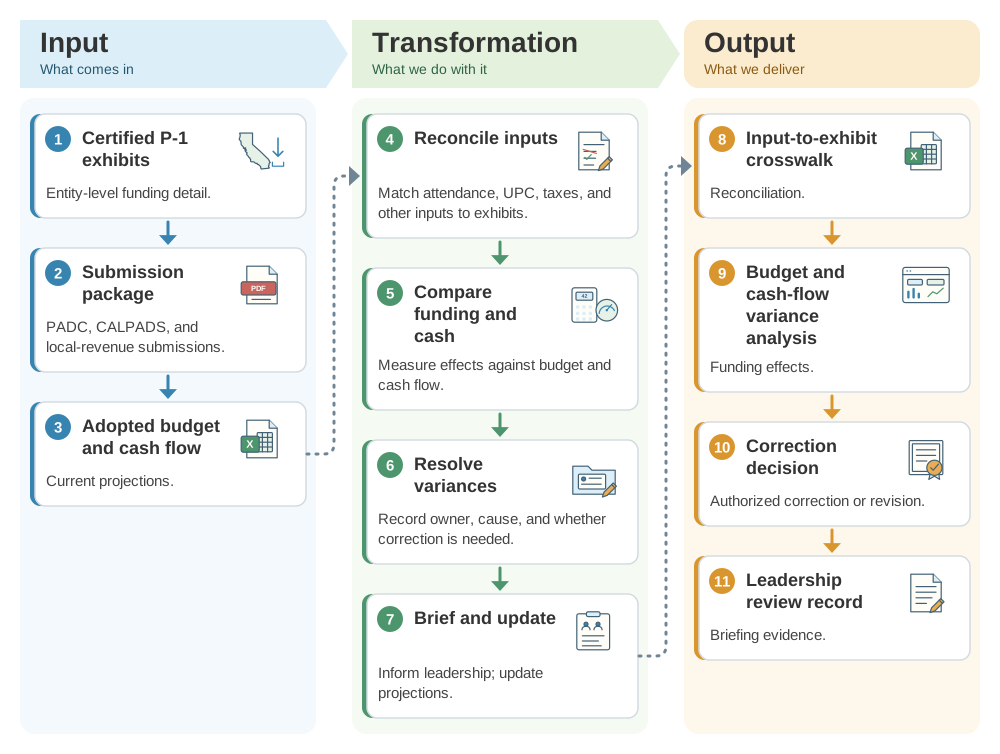
From certified P-1 exhibits to an updated funding forecast: the SDLA ITO workflow
The certified calculation changes state-aid and payment expectations, so your records must be compared with it. This SDLA ITO (Input, Transformation, Output) graphic shows how the certified P-1 exhibits, entity funding detail, and retained submission package become the input-to-exhibit crosswalk, the variance analysis, and the updated forecast.
Operational workflow
- Download CDE’s certified P‑1 exhibits and entity-level funding detail.
- Reconcile attendance, CALPADS/UPC, taxes, ERAF, special education, charter, and other applicable inputs to retained submissions.
- Compare certified funding and payment effects with the adopted/current budget and cash-flow forecast.
- Document every material variance, owner, explanation, and whether an authorized correction or budget revision is needed.
- Brief leadership/governing processes and update projections without overwriting certified evidence.
Implementation pathway
Evidence to retain
- Certified P‑1 exhibits and entity detail
- PADC/CALPADS/local-revenue submission package
- Input-to-exhibit crosswalk
- Budget and cash-flow variance analysis
- Correction decision and leadership review
Official guidance and help
- CDE PA DeadlinesOfficial P‑1 certification date
- CDE FY 2026–27 Principal ApportionmentCertified exhibits and funding detail
- CDE Principal ApportionmentPADC, calendars, and resources
- CDE Payment ScheduleCash-flow context
Source review completed August 30, 2026. Verify current CDE, PADC, ASSIST, entity-specific, grant, fiscal, attendance, and partner instructions before acting.