


SDLA Compliance Resource
Submit a Charter CALPADS/CBEDS Reporting-Status Change for 2026–27
An implementation guide for choosing the reporting method, identifying every handoff partner, completing the CDE form, protecting the outgoing year, establishing access, and confirming that the new status works in practice.
In Plain Language: A charter either reports CALPADS and CBEDS data independently or reports through its authorizing agency. It must use the same method for both systems. A change is not only a form: it is a controlled transfer of people, access, calendars, source data, historical work, error ownership, certification authority, and special-education coordination.
Why this matters
If the charter and authorizer do not know who owns each handoff, files can be prepared but never submitted, anomalies can sit unanswered, EOY work can be abandoned during the transition, and staff can discover too late that they lack CALPADS access. New charters cannot access CALPADS until the form is processed.
Joint ownership
Charter: administrator, data lead, SIS vendor, CBEDS coordinator, special-education data lead, and signer. Authorizer: superintendent/designee, CALPADS administrator, CBEDS coordinator, charter oversight contact, and data staff. State: CDE CALPADS Office and CALPADS-CSIS Service Desk.
Choose the reporting model
| Model | Who reports | Key implications |
|---|---|---|
| Independent reporting | The charter reports CALPADS and CBEDS data directly to CDE. | The charter needs trained administrators, access, internal certification authority, SIS extracts, anomaly coverage, calendars, and continuity. A charter that is its own LEA for special-education purposes must report independently. |
| Through authorizer | The authorizing agency reports on the charter's behalf. | A written handoff must define file delivery, validation correction, certification review, anomaly response, CBEDS work, special-education coordination, deadlines, escalation, and evidence returned to the charter. |
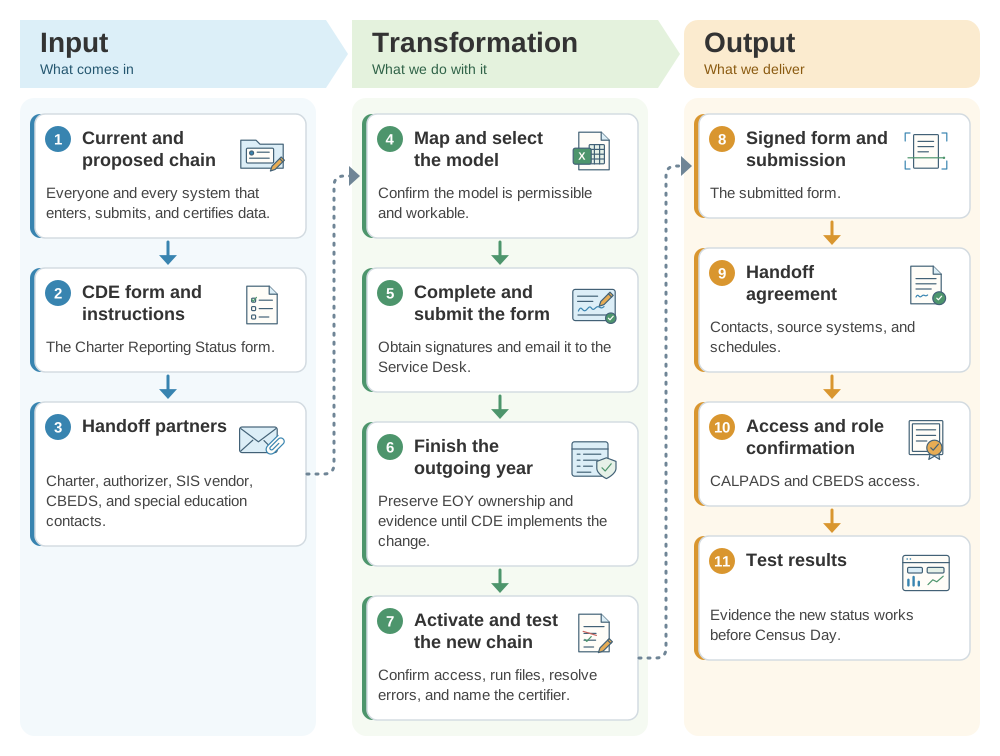
From choosing a model to a working charter reporting status: the SDLA ITO workflow
A status change is a controlled transfer of responsibility, not only a form. This SDLA ITO (Input, Transformation, Output) graphic shows how the current and proposed operating chain, the CDE form, and handoff partners become the signed form and handoff agreement, the access confirmation, and the tested status.
Implementation workflow
- Before selecting a modelMap the current and proposed operating chain.Identify every person and system responsible for source entry, extraction, submission, validation, correction, approval, certification, anomalies, CBEDS, and special education.
- Before signingConfirm the model is permissible and workable.Verify CDS code, charter type, authorizer, special-education LEA status, staffing, vendor capability, access, and the same CALPADS/CBEDS choice.
- July 1–August 31Complete and submit the current form.Obtain required charter and authorizer information and signatures; email the signed form to the CALPADS Service Desk with the CDS code and required subject language.
- During the transitionFinish the outgoing reporting year.Preserve EOY ownership, revisions, reports, credentials, anomalies, and retained evidence until CDE implements the change.
- After CDE processingActivate the new chain.Confirm CALPADS LEA Administrator access, CBEDS access, roles, contacts, SIS configuration, file testing, calendars, and special-education submission arrangements.
- Before Census DayProve the status works.Verify organization visibility, submit controlled test or production files as appropriate, resolve errors, review reports, and document who will certify Fall 1.
How to identify unknown handoff partners
| Partner needed | Where to look | What to confirm |
|---|---|---|
| Charter administrator and data lead | Charter leadership, board records, SIS contract, prior certification files, and current CDE correspondence. | Decision authority, day-to-day ownership, backup, and signer/designee. |
| Authorizer reporting team | Authorizing-agency superintendent's office, charter oversight office, CALPADS LEA Administrator, CBEDS coordinator, and data-services office. | Whether the authorizer currently reports, accepts the proposed model, and who owns each submission. |
| Special-education data partner | SELPA membership, local special-education plan, authorizer, special-education data system, and District of Special Education Accountability contacts. | Who submits special-education data and how it remains consistent with the selected reporting arrangement. |
| State processing/support | CDE Charter Reporting Status instructions and CALPADS-CSIS Service Desk. | Form receipt, processing status, access, and unresolved organization or role issues. |
Handoff agreement checklist
- Named primary and backup contacts for charter, authorizer, SIS vendor, CBEDS, special education, and executive escalation.
- Source-of-truth system and owner for enrollment, demographics, programs, staff/course, discipline, attendance, and special education.
- File schedule, secure transfer method, validation turnaround, correction authority, and resubmission deadline.
- Who reviews certification reports, who approves, who certifies, and how evidence returns to all accountable parties.
- Anomaly contact, Service Desk authority, access provisioning, credential removal, and continuity during staff turnover.
- Old-year closeout and new-year start responsibilities with no unowned interval.
Official guidance and help
- Charter Reporting Status Form InstructionsCurrent choices, deadlines, processing, submission, and special-education considerations.
- 2026–27 Charter Reporting Status Change FormCurrent form for initial designation or change.
- CALPADS/CBEDS Charter School Data Reporting PolicyReporting options and new-charter access requirements.
- CALPADS System DocumentationRequired files, code sets, and procedures.
Source review completed August 30, 2026. Verify the current form, CDS code, authorizer, special-education LEA status, reporting calendar, access, and CDE-processed status before acting.