


SDLA Compliance Resource
Complete Authorized Audit Adjustments and Prior-Year Corrections
A controlled correction window requiring the right fiscal year, mode, audit support, CDE access, and final verification—including the ELO‑P operational-intent cutoff.
In Plain Language: Identify each correction and authority, obtain required audit finding or auditor concurrence, request access when necessary, enter in the correct year/period/mode, and verify the final report.
Why this matters
A correction posted to the wrong period or without required audit support can fail, alter funding incorrectly, or become unavailable after the cutoff.
Primary ownership
Primary owner: PADC/principal-apportionment fiscal lead. Partners: auditor, attendance/CALPADS, ELO‑P, charter/COE/SELPA staff, superintendent, and CDE PASE.
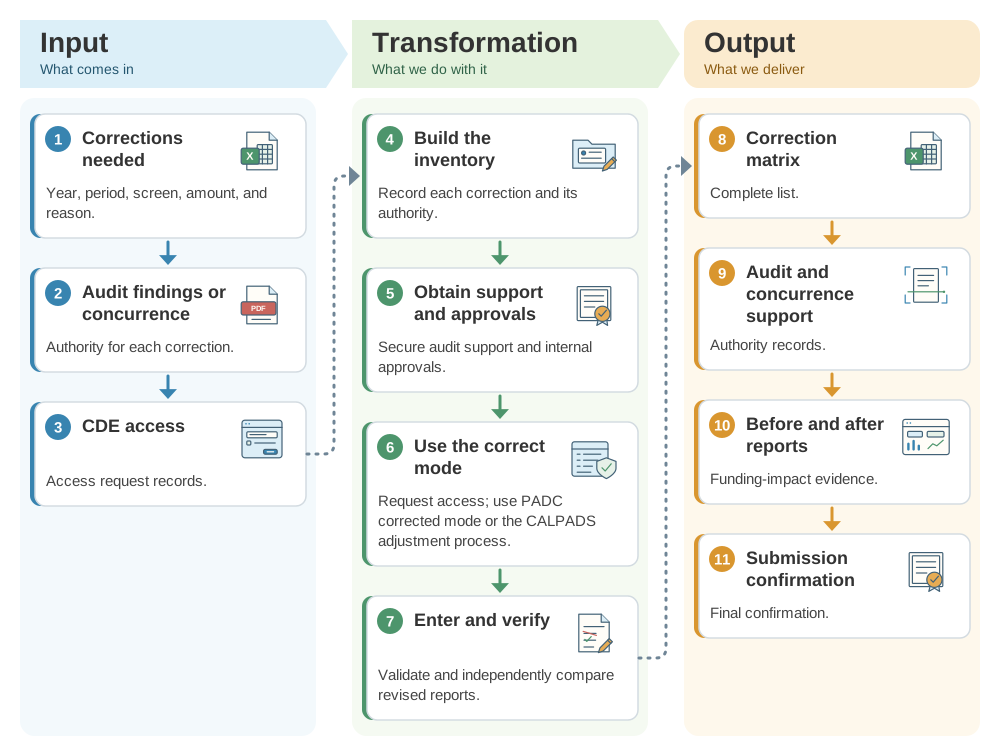
From a correction inventory to submitted audit adjustments: the SDLA ITO workflow
Every correction needs the right year, period, mode, and audit authority before it is entered. This SDLA ITO (Input, Transformation, Output) graphic shows how audit findings, prior-year PADC data, and the ELO-P operational-intent correction become the correction matrix, the before and after reports, and the submission confirmation.
Operational workflow
- Build correction inventory by year, period, screen, amount, reason, and authority.
- Obtain audit support and internal approvals.
- Request CDE access and use the correct PADC corrected mode or CALPADS adjustment process.
- Enter, validate, and independently compare revised reports.
- Submit by October 1 and retain final funding-impact evidence.
Implementation pathway
Evidence to retain
- Correction matrix
- Audit/concurrence support
- CDE access record
- Before/after reports
- Submission confirmation
Official guidance and help
- CDE PA DeadlinesCurrent correction cutoff
- CDE PADC Due DatesScreen context
- CDE Principal ApportionmentProgram resources
Source review completed August 30, 2026. Verify the live CDE calendar, current CALPADS/PADC instructions, local source records, required partner approvals, and final posted or certified state before acting.