



SDLA Compliance Resource
Provide Timely Notice When a Pupil Is Absent Without Permission
An early attendance-control guide for notifying the family, verifying the reason, correcting errors, activating support, and preserving the distinction between an absence alert and a statutory truancy notice.
In Plain Language: An early unexcused-absence notice tells the parent or guardian what the school recorded, asks for correction or verification, and offers help before the pupil reaches the statutory truancy threshold. It supports student safety and early intervention. It is not the FIRST NOTICE required by section 48260.5 unless the pupil has actually met the section 48260 threshold and the notice contains every required statement.
Why this matters
Waiting until three qualifying occurrences loses time to identify illness, transportation, housing, bullying, mental-health, caregiving, disability, or recordkeeping problems. At the same time, calling every absence “truancy” erodes accuracy and due process.
Joint ownership
Daily record: attendance clerk/teacher. Outreach: school office or automated notification owner. Follow-up: administrator, attendance team, counselor, nurse, and homeless/foster/special-education partners as applicable.
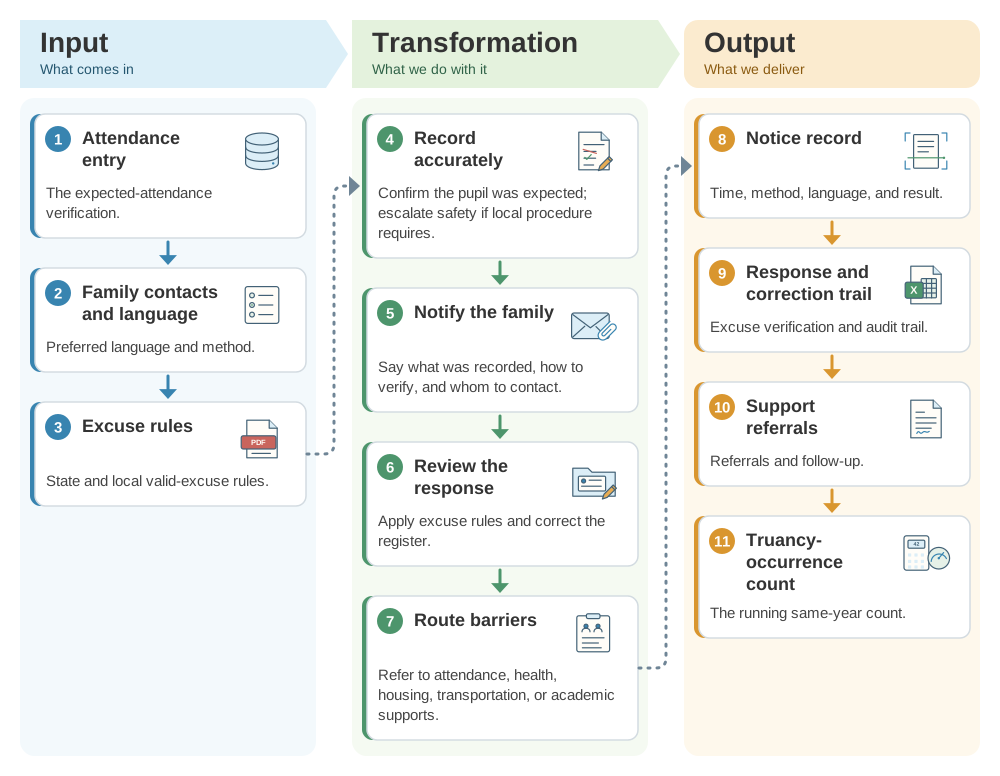
From an unexcused absence to an early notice and support: the SDLA ITO workflow
This early alert differs from the statutory truancy notice, because it asks for correction and offers help before the threshold. This SDLA ITO (Input, Transformation, Output) graphic shows how the attendance entry, the family's contact information, and local excuse rules become the attendance entry and notice record, the response and correction trail, and the support follow-up.
Three-document attendance sequence
Operational workflow
- Confirm the pupil was expected, record the absence/tardy accurately, and complete same-day safety escalation when local procedure requires it.
- Notify the parent/guardian promptly in an understandable language with the date, recorded status, correction/verification method, and school contact.
- Review the response and apply state/local excuse rules; correct the register and downstream records when evidence supports correction.
- Identify patterns and route barriers to appropriate attendance, health, mental-health, transportation, housing, foster, disability, or academic supports.
- Track qualifying unexcused occurrences; when section 48260 is met, issue the separate complete FIRST NOTICE.
Evidence to retain
- Attendance entry and expected-attendance verification
- Notice time, method, language, content, and delivery result
- Parent response, excuse verification, and correction audit trail
- Support referrals and follow-up
- Running same-year truancy-occurrence count
Official guidance and help
- CDE School Attendance Improvement StrategiesPrompt family contact and early intervention
- Education Code section 48260Statutory truancy threshold
- Education Code section 48260.5Separate required FIRST NOTICE
Source review completed August 30, 2026. Verify current law, official guidance, local policy, language access, individual circumstances, and the exact persisted attendance or pupil-record state before acting.