



SDLA Compliance Resource
Notify the Parent or Guardian When a Pupil Is Initially Classified as Truant
A first-notice guide for verifying the statutory threshold, including every required support-centered statement, correcting inaccurate attendance, and preserving delivery evidence.
In Plain Language: The FIRST NOTICE is triggered when a pupil reaches the section 48260 threshold: three full days without valid excuse, three unexcused tardies or absences of more than 30 minutes, or a combination. The district reports the pupil as a truant and notifies the parent or guardian using the most cost-effective method possible, which may include email or a telephone call, with every statement required by section 48260.5.
Why this matters
A generic absence alert is not the statutory first truancy notice. The notice must identify the classification and emphasize attendance responsibility, available alternatives, the right to meet, mental-health/supportive services, school partnership, and the research-based consequence of missing 10 percent of school.
Joint ownership
Record owner: attendance clerk. Classifier: attendance supervisor/superintendent designee. Notice/support team: school administrator, counselor, mental-health/student-support staff, and language-access staff.
From a truancy threshold to a complete first notice: the SDLA ITO workflow
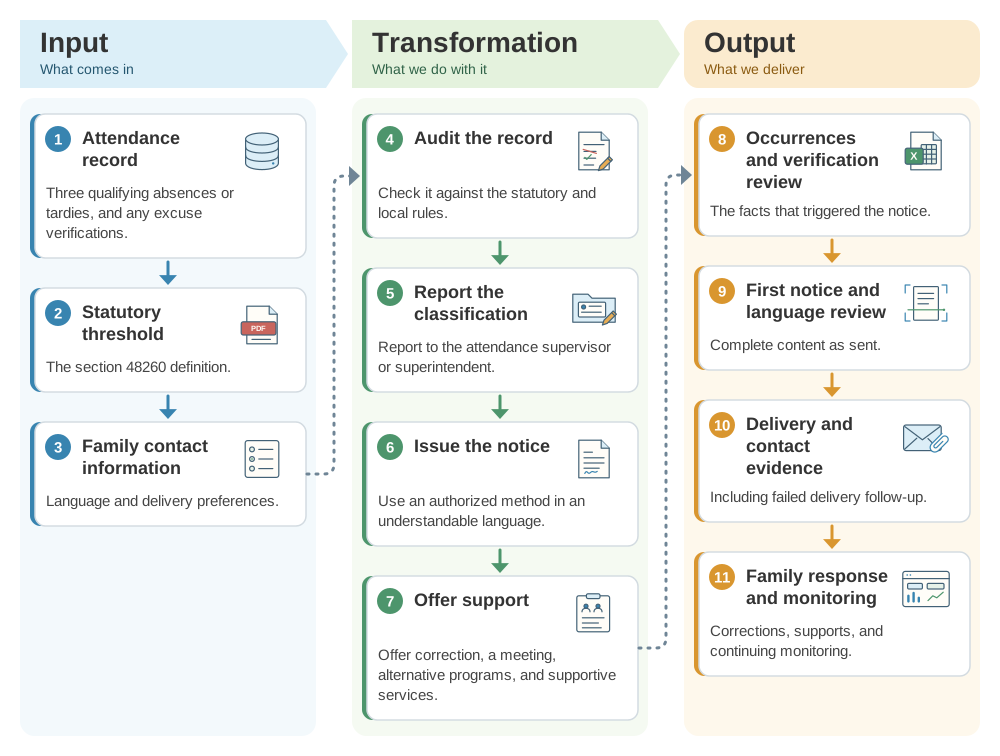
The first notice must contain every required statement and give the family a way to correct the record. This SDLA ITO (Input, Transformation, Output) graphic shows how the attendance record, the absence verifications, and the family's contact information become the occurrences and report, the notice and delivery evidence, and the family response and follow-up.
Three-document attendance sequence
Operational workflow
- Audit the attendance record and supporting absence verification against sections 48205, 48225.5, 48260, and local rules.
- Report the initial truancy classification to the attendance supervisor or superintendent.
- Issue the complete section 48260.5 notice through an authorized cost-effective method and in an understandable language.
- Offer record correction, a meeting, alternative programs, mental-health/supportive services, and attendance strategies.
- Retain the occurrences, notice content, delivery/attempt evidence, family response, and intervention follow-up.
Evidence to retain
- Three qualifying occurrences and excuse/verification review
- Truancy report and date of classification
- Complete FIRST NOTICE content and language-access review
- Delivery or contact evidence and returned/failed follow-up
- Corrections, family contact, supports, and continuing attendance monitoring
Official guidance and help
- Education Code section 48260Initial truancy threshold
- Education Code section 48260.5Required FIRST NOTICE content
- CDE First Notification of TruancyCurrent model notice
Source review completed August 30, 2026. Verify current law, official guidance, local policy, language access, individual circumstances, and the exact persisted attendance or pupil-record state before acting.