



SDLA Compliance Resource
Transfer ELPAC Results With the Student’s Educational Record
A cumulative-record handoff that preserves English learner identification, annual results, domain evidence, accommodations, and program history for immediate receiving-school action.
In Plain Language: Include current and historical ELPAC score reports and the related EL status/program record in the cumulative-record transfer. The receiving school reconciles the record with CALPADS and current services.
Why this matters
Without the result and status context, the receiving school may retest incorrectly, miss annual testing, delay services, or make a reclassification decision from incomplete evidence.
Joint ownership
Sender: registrar/EL records custodian. Receiver: registrar and EL coordinator. Partners: CALPADS, assessment, counseling, special education, and family liaison.
From a student transfer to a reconciled ELPAC record: the SDLA ITO workflow
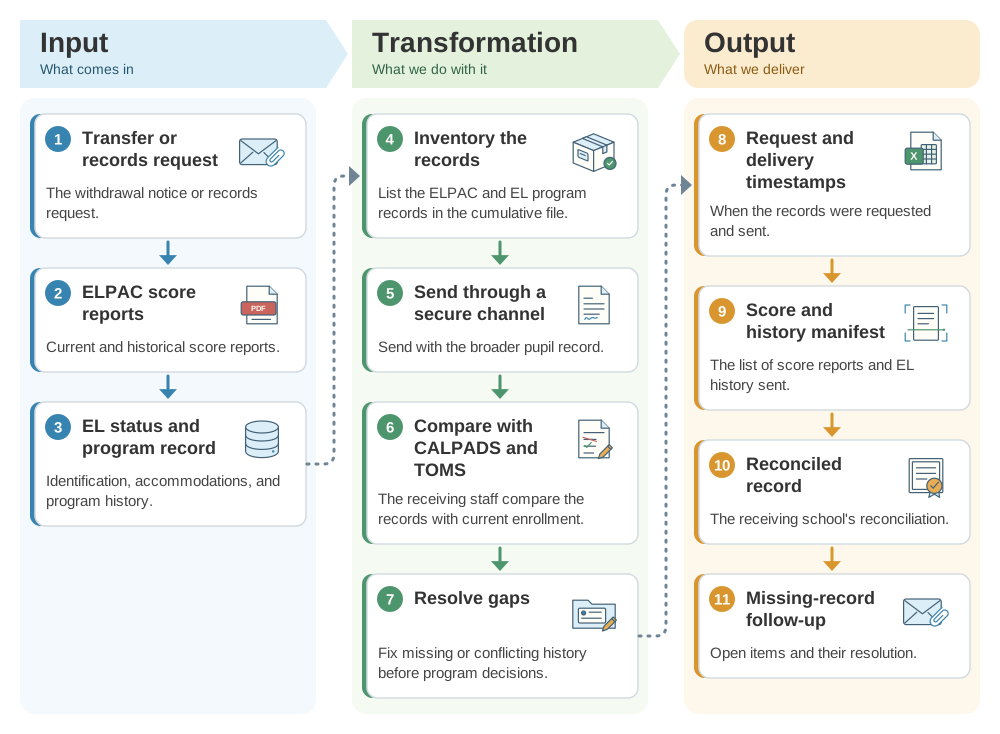
The ELPAC history moves with the cumulative record, so it should not wait for the next testing cycle. This SDLA ITO (Input, Transformation, Output) graphic shows how the cumulative file, the ELPAC and EL program records, and the request become the transfer timestamps, the score and history manifest, and the reconciled record.
Operational workflow
- At withdrawal/request, inventory ELPAC and EL-program records in the cumulative file.
- Send through the authorized secure channel with the broader pupil record.
- Receiving staff compare records with CALPADS/TOMS and current enrollment.
- Resolve missing or conflicting history before registering or making program decisions.
Transfer chain
Evidence to retain
- Request and delivery timestamps
- Score reports and EL history manifest
- Secure-transfer proof
- Receiving reconciliation
- Missing-record follow-up
Official guidance and help
- Education Code section 49068California pupil-record transfer
- CDE Summative ELPACScores and results resources
- CDE Assessment Data FilesState result data and layouts
Source review completed August 30, 2026. Verify current federal and California law, CDE and test-contractor manuals, local board policy, adopted instruments, individual student circumstances, and live system status before acting.