



SDLA Compliance Resource
Reconcile Summative ELPAC Participation by Student and Domain
A focused roster control for matching active English learner status, enrollment, general or alternate assignment, domain exemptions, completion, incidents, and approved dispositions.
In Plain Language: Compare the current EL roster with TOMS and domain status. Resolve every missing, partial, duplicate, alternate, exempt-domain, transfer, absence, and incident case through the correct owner.
Why this matters
A single “tested/not tested” flag hides domain-level gaps and incorrect eligibility handoffs. Reconciliation supports valid results, services, and reclassification decisions.
Joint ownership
Owner: LEA ELPAC coordinator. Partners: CALPADS/EL staff, registrars, special education, sites, test examiners, and attendance.
From the EL roster to domain-level ELPAC sign-off: the SDLA ITO workflow
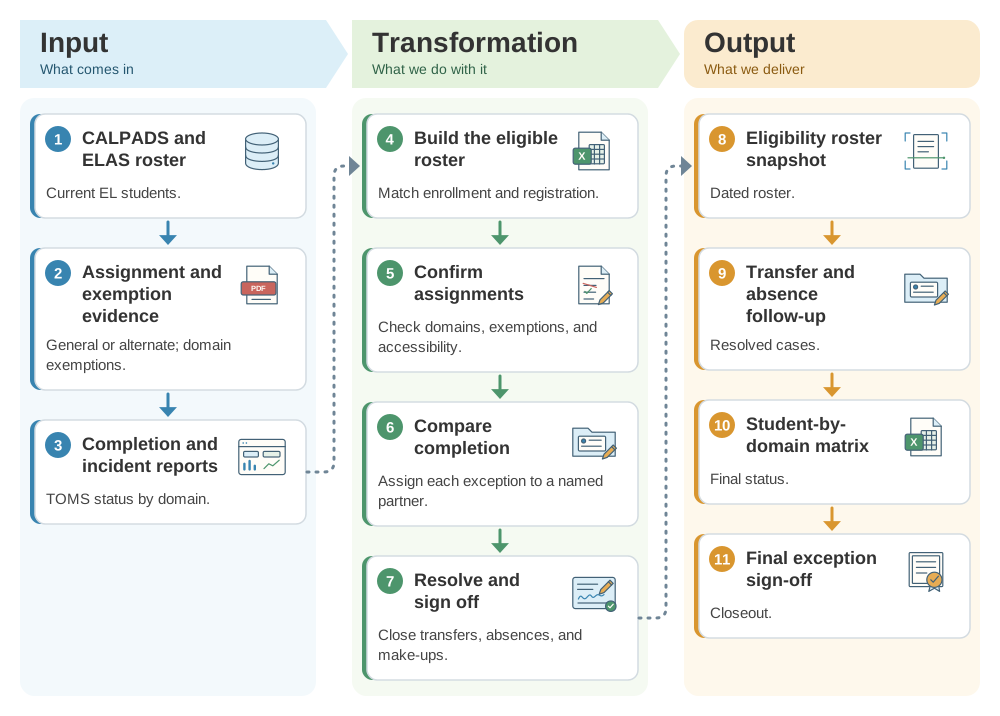
Every student and domain is matched to TOMS, with each exception assigned to a named partner. This SDLA ITO (Input, Transformation, Output) graphic shows how the current CALPADS and ELAS roster, enrollment, assignments, and completion reports become the roster snapshot, the exception follow-up, and the final domain sign-off.
Operational workflow
- Build the eligible roster from current CALPADS/ELAS and enrollment records.
- Confirm general/alternate assignment, domains, exemptions, accessibility, and site registration.
- Compare daily completion and incident status; assign every exception to a named handoff partner.
- Resolve transfers/absences and approved make-ups, then retain a final domain-level sign-off.
Student-by-domain matrix
Evidence to retain
- Eligibility roster snapshot
- Assignment and domain-exemption evidence
- Completion/incident reports
- Transfer and absence follow-up
- Final exception sign-off
Official guidance and help
- CDE Summative ELPACParticipation and scoring resources
- CDE Alternate ELPACAlternate assessment rules
- ELPAC STAIRSIncident resolution
Source review completed August 30, 2026. Verify current federal and California law, CDE and test-contractor manuals, local board policy, adopted instruments, individual student circumstances, and live system status before acting.