



SDLA Compliance Resource
Stop, Report, and Resolve an ELPAC Test Started for an Ineligible Student
A rare-incident control: protect the session, report through STAIRS, correct the eligibility source, and follow the official disposition rather than improvising.
In Plain Language: Stop testing when safe, preserve facts and test security, notify the coordinator, submit the incident in STAIRS, and follow the authorized disposition. Correct the originating CALPADS, enrollment, HLS, ELAS, or IEP record as applicable.
Why this matters
Continuing, deleting, resuming, or retesting without direction can compound the incident and corrupt both assessment and English learner records.
Joint ownership
Owner: LEA ELPAC coordinator. Partners: site coordinator, CALPADS/registrar, EL program, special education, and test administrator.
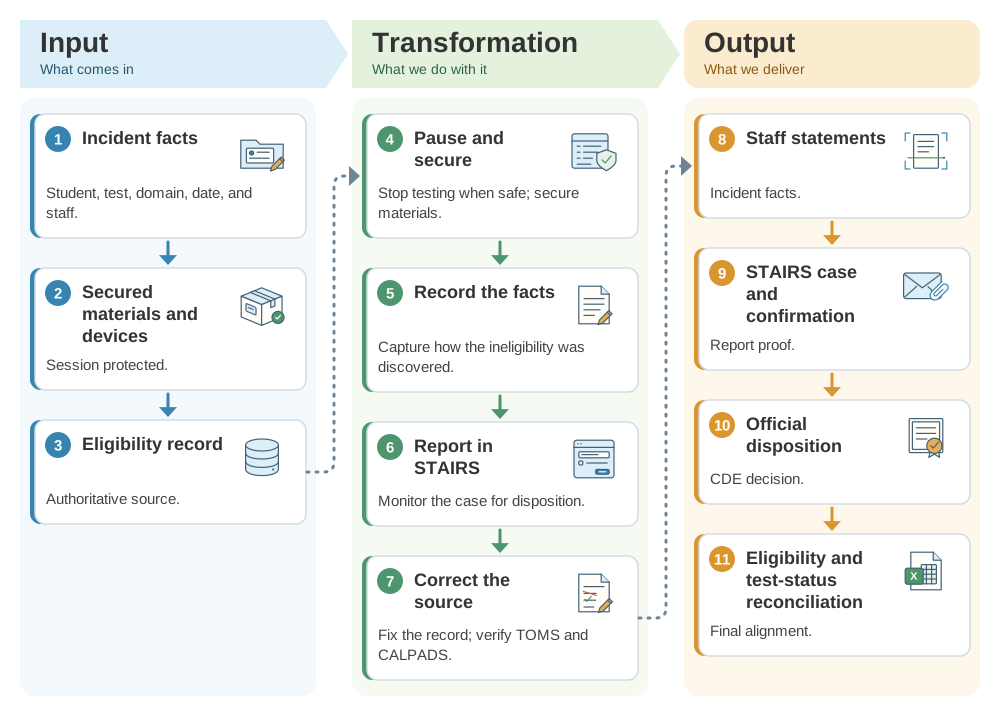
From an ineligible-student ELPAC session to an official STAIRS disposition: the SDLA ITO workflow
Stop the session, protect security, report promptly, and correct the source record that caused the error. This SDLA ITO (Input, Transformation, Output) graphic shows how the incident facts, the secured materials, and the student's eligibility record become the incident record, the STAIRS case and disposition, and the corrected eligibility reconciliation.
Operational workflow
- Pause the affected session and secure materials/devices.
- Record student, test, domain, date/time, session status, staff, and how the ineligibility was discovered.
- Report in STAIRS and monitor the case for disposition.
- Correct the authoritative eligibility record and verify TOMS/CALPADS alignment after processing.
Rare-event path
Evidence to retain
- Incident facts and staff statements
- STAIRS case/confirmation
- Official disposition
- Source-system correction
- Final eligibility/test-status reconciliation
Official guidance and help
- ELPAC STAIRSCurrent incident reporting
- ELPAC Test AdministrationCurrent manuals and coordination resources
- CDE Summative ELPACState program page
Source review completed August 30, 2026. Verify current federal and California law, CDE and test-contractor manuals, local board policy, adopted instruments, individual student circumstances, and live system status before acting.