



SDLA Compliance Resource
Explain Alternate Assessment Meaning Before the IEP Team Decides
A parent-facing explanation of standards, instruction, score meaning, diploma considerations, and why participation remains an individualized team decision.
In Plain Language: Explain that alternate assessments measure achievement against alternate standards for students with the most significant cognitive disabilities. The student still receives instruction connected to grade-level content.
Why this matters
Families need enough information to participate meaningfully without hearing that the decision is predetermined or that an alternate assessment automatically decides the student’s diploma.
Joint ownership
Owner: case manager/assessment coordinator. Partners: parent, student, IEP team, interpreter, transition counselor, and EL staff for Alternate ELPAC.
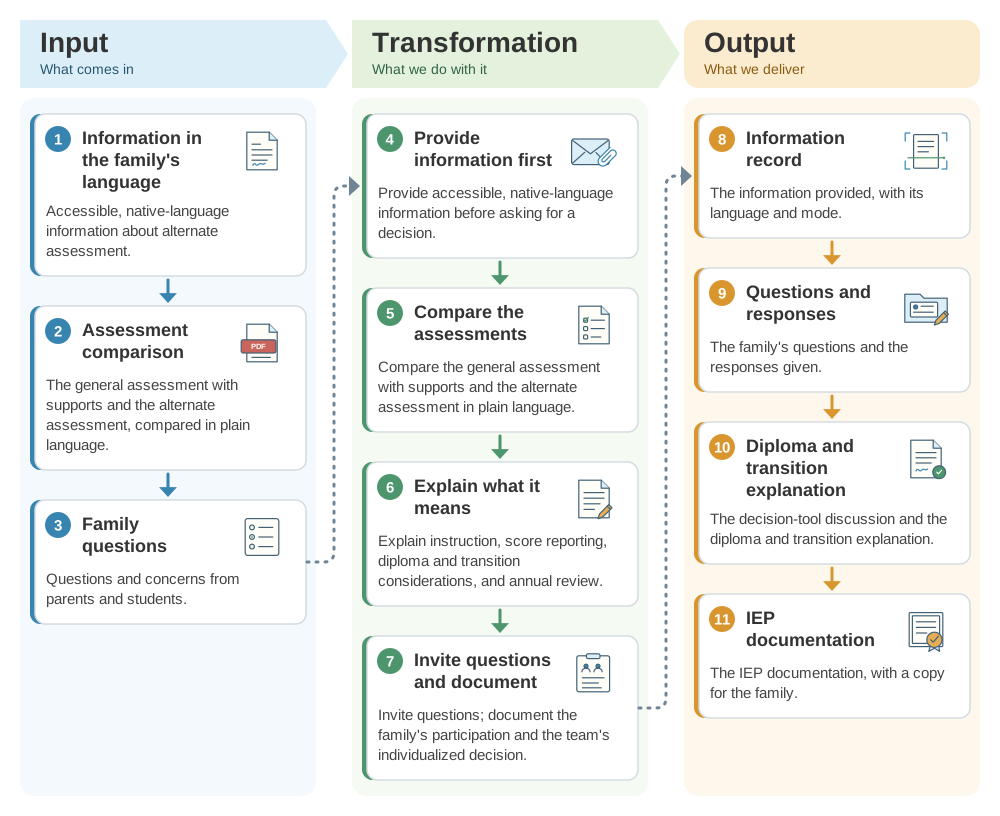
From plain-language information to a team decision: the SDLA ITO workflow
Alternate assessments measure achievement against alternate standards; participation remains an individualized team decision. This SDLA ITO (Input, Transformation, Output) graphic shows how accessible information, the assessment comparison, and the family's questions become the information record, the questions and responses, the diploma and transition explanation, and the IEP documentation.
Operational workflow
- Provide accessible, native-language information before asking for a decision.
- Compare the general assessment with supports and the alternate assessment in plain language.
- Explain instruction, score reporting, diploma/transition considerations, and annual review.
- Invite questions; document the family’s participation and the team’s individualized decision.
What families should leave knowing
Evidence to retain
- Information provided and language/mode
- Questions and responses
- Decision-tool discussion
- Diploma/transition explanation
- IEP documentation and copy
Official guidance and help
- CDE IEP Team GuidanceParent-information requirements
- CDE Alternate ELPACEnglish-proficiency alternate assessment
- CDE Alternate Diploma PathwaySeparate California pathway guidance
Source review completed August 30, 2026. Verify current federal and California law, CDE and test-contractor manuals, local board policy, adopted instruments, individual student circumstances, and live system status before acting.