



SDLA Compliance Resource
Allow CALPADS Changes to Reach TOMS Before Testing
A source-to-system verification that separates submitting a CALPADS correction from confirming its downstream assessment effect.
In Plain Language: Correct the authoritative source, confirm the CALPADS record processed, allow the documented interface interval, and then verify the expected pupil record and test assignment in TOMS/TDS.
Why this matters
A successful local extract or CALPADS upload is not proof that TOMS changed. Testing too soon can produce the wrong school, grade, assessment, accessibility setting, or eligibility.
Primary ownership
Primary owner: CALPADS/data coordinator for the source correction and assessment coordinator for downstream verification. Partners: registrar, special education, EL staff, site coordinator, and SIS vendor.
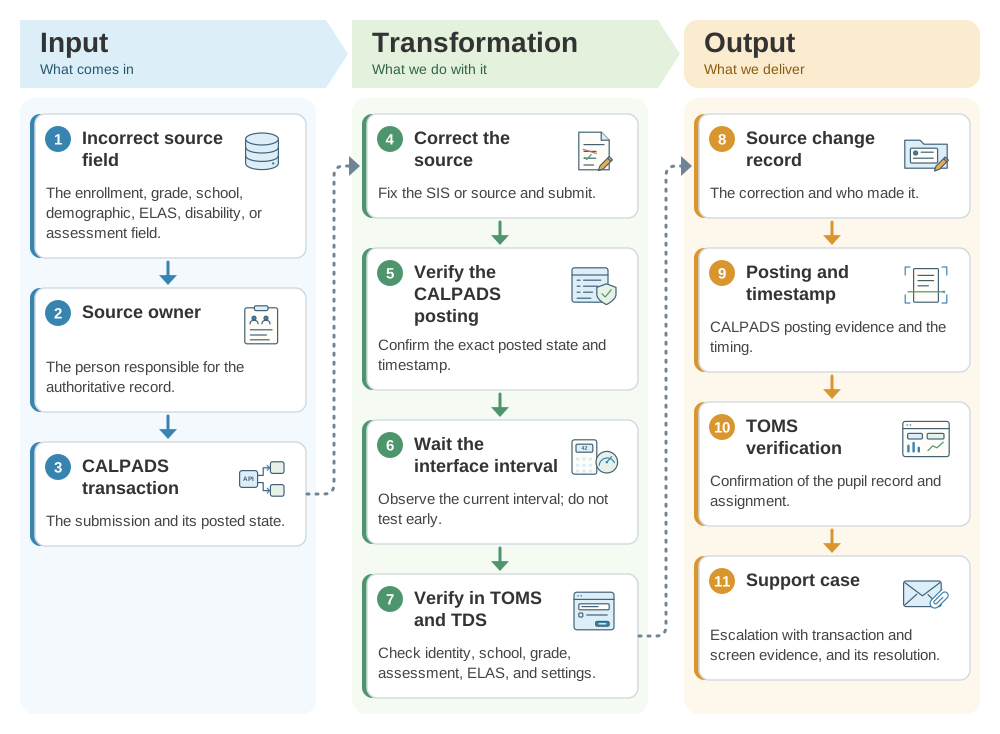
From a CALPADS correction to a verified TOMS record: the SDLA ITO workflow
Submitting a correction is different from confirming its effect downstream, so allow time and verify. This SDLA ITO (Input, Transformation, Output) graphic shows how the incorrect source field, the CALPADS posted state, and the TOMS and TDS records become the source change record, the TOMS verification, and the support case if needed.
Operational workflow
- Identify the incorrect authoritative field and responsible source owner.
- Correct SIS/source and submit; verify the exact CALPADS posted state and timestamp.
- Observe the current interface interval and avoid premature testing.
- Verify pupil identity, school, grade, assessment, ELAS, and settings in TOMS/TDS.
- Escalate with transaction and screen evidence if downstream state remains wrong.
Implementation pathway
Evidence to retain
- Source change
- CALPADS transaction/posting
- Timestamp/deadline
- TOMS verification
- Support case and resolution
Official guidance and help
- TOMS ResourcesCurrent student-data workflow
- CAASPP & ELPAC HomeCurrent TOMS guide
- CDE CALPADSAuthoritative state data guidance
Source review completed August 30, 2026. Verify current California requirements, CAASPP and ELPAC manuals, live system status, local policy, pupil records, and final system state before acting.