



E Pluribus Unum: The American Pursuit of Liberty, Growth, and Equality, 1750–1900
1
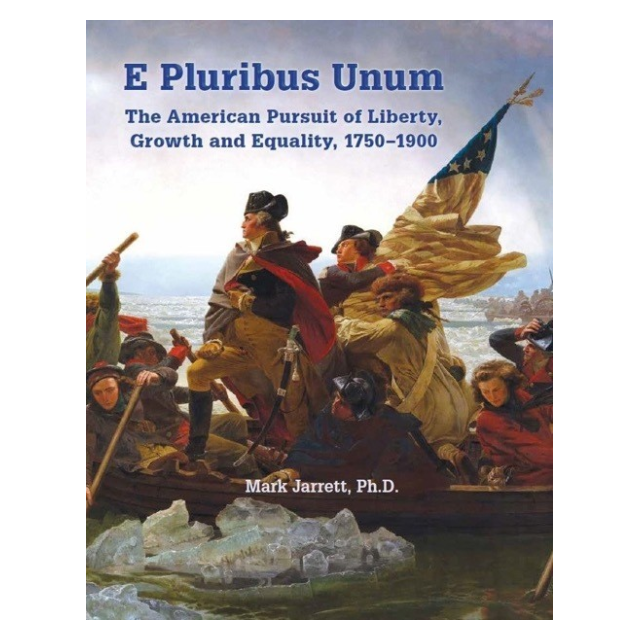
Product identity
- Publisher
- First Choice Educational Publishing
- Program family
- E Pluribus Unum
Instructional fit
- Courses
- Grade 8 United States history; grade 8
- Role explanation
- Core grade 8 United States history textbook and online program.
- Subjects covered
- Supported grades
- Supported instructional roles
Materials and delivery
- Format description
- Hardcover student text and online program with teacher guidance, audio, video, review tools, primary sources, activities, and assessment.
- Included components
- Hardcover student text; online student program; Teacher's Guide; nineteen chapters; advanced organizers; California standards and essential questions; vocabulary word walls; primary-source excerpts; maps and illustrations; concept maps; chapter activities; review cards; audio support; introductory videos; test questions and answer key.
- Languages and support
- English with vocabulary definitions, chunked text, advanced organizers, gradually increasing reading complexity, audio files, concept maps, and teacher literacy strategies.
Links and notes
- Vendor product URL
- Visit publisher product page
- Curriculum notes
- The full state-adopted title replaces the shortened source name 'E Pluribus Unum.' The publisher currently offers the hardcover text and online program. No numbered edition is identified on the official product page, so the edition field is blank.
Availability
- Product availability
- Available
- Last checked
- September 29, 2026
A California grade 8 United States history program spanning 1750–1900 through historical narrative, primary sources, essential questions, literacy supports, concept maps, activities, and assessment.
E Pluribus Unum: The American Pursuit of Liberty, Growth, and Equality, 1750–1900 was written for California's grade 8 History–Social Science Framework. Nineteen chapters examine constitutional democracy, national expansion, reform, sectional conflict, Reconstruction, industrialization, immigration, and changing ideas of liberty and equality. Repeated chapter structures support previewing, vocabulary, close reading, primary-source analysis, synthesis, and assessment.