Amplify Science
Overview
- Overview
-
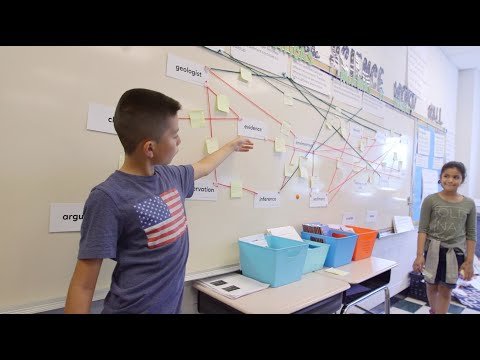
Amplify Science is Amplify’s core K–8 science curriculum. Students investigate real-world problems through hands-on activities, simulations, readings, discussion, models, and written scientific explanations.
Investigations generate observations, models, and explanations across several lessons. Teachers connect those artifacts with the scientific question and the learning progression. The adopted edition and implementation determine the available digital records. Curriculum teams and teachers coordinate materials, access, and the interpretation of locally assessed work.
Features
- Features
-
Audience and instructional role
Grades / learners:
elementary and middle-school science learners
Primary users:
science teachers, students, curriculum leaders, and instructional coaches
Learning focus:
phenomena, investigation, modeling, evidence, explanation, reading, and three-dimensional science learning — Amplify’s core K–8 science curriculum
How it supports learning
- Students investigate real-world problems through hands-on activities, simulations, readings, discussion, models, and written scientific explanations.
- Teachers should connect use to explicit learning goals and inspect student work rather than rely on completion or engagement alone.
Implementation and instructional decisions
- Confirm edition, grade bands, kit materials, digital devices, replenishment, assessment, California alignment, and teacher learning.
- Districts should confirm accessibility, language support, student-data practices, assignment workflow, reporting, and the continuing role of teacher judgment.
Student Data Privacy
- Student Data Privacy
-
Review the Common Sense Privacy Rating:
N/A
Amplify Science Privacy Policy:
https://amplify.com/customer-privacy/
Signed California Student Data Privacy Agreement?
Yes
Company News
- Company News
Interoperability
Sign-on, rostering, and file exchange methods
Learning Management System Connectivity
Select a connector to see every product that supports it.
Quick Start Guide
- Quick Start Guide
In every unit students engage in a relevant, real-world problem. Scientific phenomena are investigated as they engage in collaboration and discussion. Developing models or explanations allow them to arrive at solutions.
A science program that educators can use to bring the NGSS and three-dimensional science learning to life. Students engage with science and engineering practices, figure out disciplinary core ideas, and utilize and apply crosscutting concepts in multiple modalities across thoughtful, structured lessons, all centered around engaging anchor phenomena.
Note: SDLA does not endorse or resell any products listed on the site. They are listed simply to aid in the development of integration resources for school district ed-data leaders.
Media
Videos